
Why Double Glazing Matters in the GCC Climate
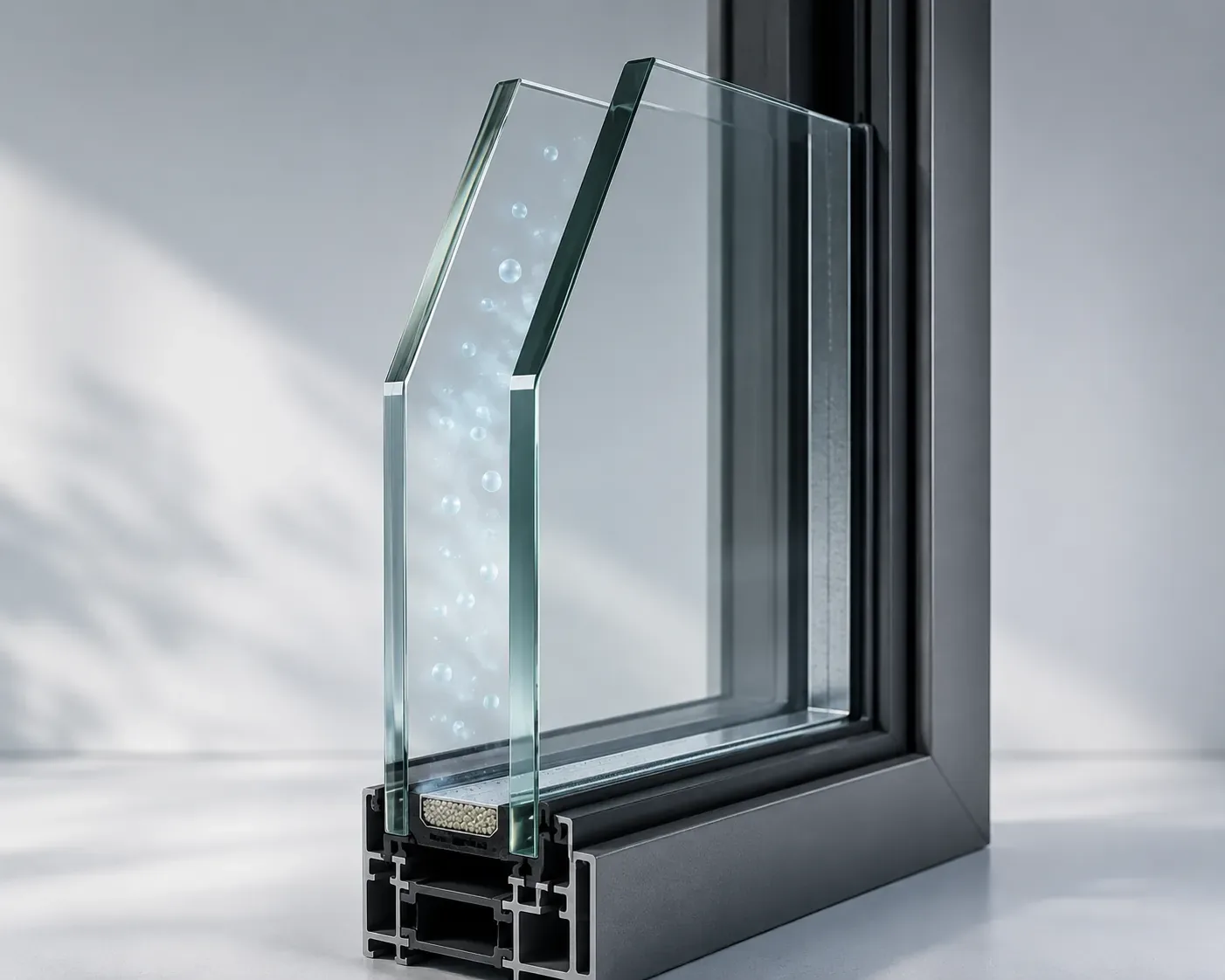
In a climate where outdoor temperatures regularly exceed 45°C, the glass in a building's façade does more work than almost any other material. Double glazing — or Insulated Glass Units (IGUs) — pairs two panes of glass, typically 6–12mm each, separated by an aluminum spacer bar and sealed around the edges with structural silicone.
That sealed air gap is where the performance comes from. Instead of a single pane transferring heat directly from outside to in, the trapped gas layer slows the transfer dramatically, cutting the load on air conditioning systems and keeping interior surfaces closer to room temperature even on the hottest days.
Filling that gap with argon instead of ordinary air improves the insulation further, since argon conducts heat more slowly than air. Combined with a Low-E (low-emissivity) coating on one of the internal surfaces, an IGU can reject a significant share of solar heat while still admitting natural daylight.
The benefits go beyond energy savings. The extra pane and sealed cavity meaningfully reduce noise transfer from traffic, construction, or neighboring units — a real advantage for villas and towers alike in busy urban areas. A properly fabricated IGU, backed by a long-term structural silicone warranty, also resists seal failure and fogging for many years.
For any project across the GCC — residential, commercial, or hospitality — double glazing is one of the most cost-effective upgrades available, paying for itself through lower cooling bills and a noticeably more comfortable interior.